
What is the cold chain?
The cold chain is the unbroken series of storage, transport and handover steps that keeps a temperature-sensitive product within its label range from manufacture to use. The most common range is 2–8 °C; the chain protects against warming and freezing alike, and every link has to be on record.
Last updated:
This content is for information only. It is not a regulatory interpretation, an audit opinion or a storage instruction for your product. The approved label and the current guidance of the competent authority take precedence.
The cold chain is the unbroken series of links that keeps a temperature-sensitive product within the range on its label, from where it is made to where it is used. Warehouses, cold rooms, transport containers, vehicles, handovers and the records that document all of them are part of it. A break in one link can undo the work of every link before it.
Which products need the cold chain?
Many vaccines and biological medicines are labelled “Store in a refrigerator (2–8 °C)”. Some diagnostic kits and medical products are kept in the same range. Other products are stored frozen; the label always sets the range. This article takes the most common case, 2–8 °C.
The links in the chain
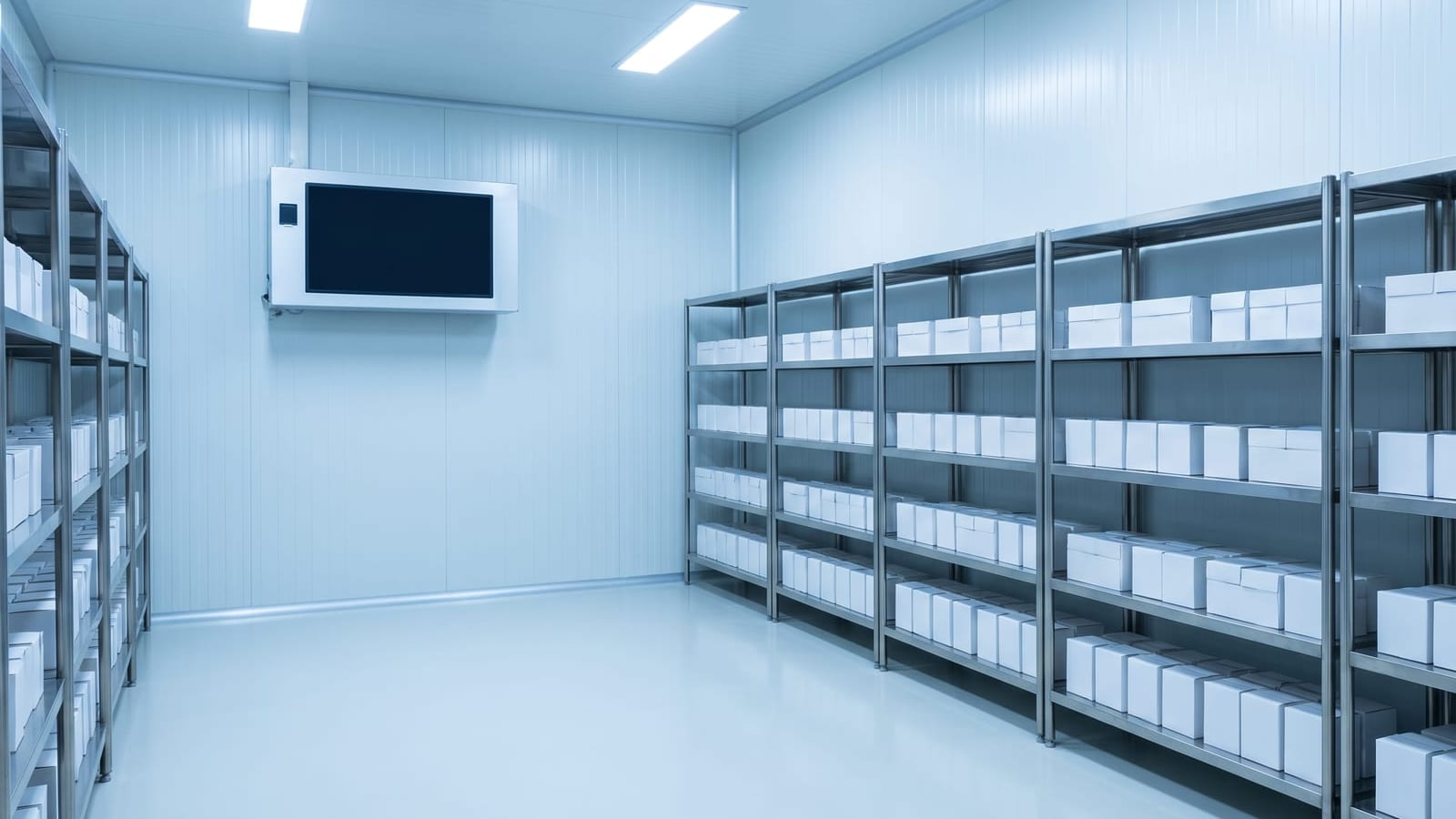
In storage, the product sits in a cold room or a pharmaceutical refrigerator whose temperature has been mapped and is monitored continuously. Monitoring devices are calibrated at set intervals and raise an alarm when the temperature leaves its range. Temperature mapping decides where the sensors go.
In transport, the product travels in vehicles that keep the required condition, or in packaging qualified for that condition. The EU GDP guidelines ask for the required conditions to be kept throughout transport, and for that to be demonstrable.
At handovers, the product passes from one party to the next: manufacturer to warehouse, warehouse to carrier, carrier to customer. These are the moments when the chain breaks most often; we cover the break points in a separate article.
Freezing is a deviation too
The cold chain is not only about keeping products cool. Many 2–8 °C products cannot take freezing, and their labels say “Do not freeze”. A product that has frozen and thawed can look perfectly normal. That is why the chain watches both the upper and the lower limit.
Known causes of freezing include shelves too close to the cooling unit, vehicles left waiting in the cold, and frozen cool packs touching the product inside a transport box.
Who is responsible for what?
Every link has an owner. The warehouse answers for the condition in its space, the carrier for the condition on the road, and these roles are written into contracts. The decision on whether a product can still be used always belongs to the product owner.
No records, no chain
The only proof that a product stayed in the right condition along the chain is the record: storage temperature records, the measurements taken by data loggers in transit, and the times of each handover. If the records show a deviation, the goods are quarantined and the decision is left to the marketing authorisation holder, based on stability data. We look at how excursions in transport are assessed separately.
References
- European Commission, Guidelines of 5 November 2013 on Good Distribution Practice of medicinal products for human use (2013/C 343/01)
- WHO Technical Report Series No. 1025, Annex 7: Good storage and distribution practices for medical products (2020)
Information only; not a regulatory interpretation or a storage instruction.